

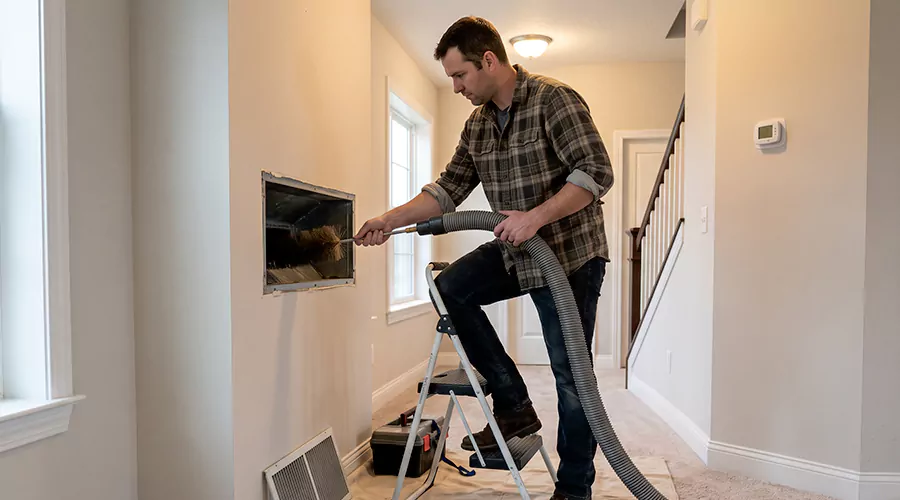
HVAC cleaning costs depend on which parts of the heating and cooling system are being cleaned. In the United States in 2026, a routine HVAC maintenance visit commonly costs $175 to $350, while professional air duct cleaning averages approximately $390. Cleaning an indoor evaporator coil typically costs $100 to $400, and more involved cleaning projects can cost considerably more.
The term HVAC cleaning is used for several services that address different components. One contractor may be referring to cleaning the air conditioner's coils and checking the condensate drain. Another may be offering a full HVAC duct cleaning service involving supply and return passages throughout the house.
These differences matter because the equipment, labor, and expected results are not the same. Cleaning a dusty outdoor condenser is usually less involved than removing a heavily contaminated indoor coil for service. Similarly, cleaning a removable filter does not require the specialized collection equipment used for internal duct cleaning.
Homeowners can make better decisions by identifying the components that need attention before comparing prices. A clear quote should describe the cleaning work and separate it from mechanical repairs or replacement parts.
What Is the Average HVAC Cleaning Cost in 2026?
There is no single nationwide average for every type of HVAC cleaning because the phrase covers different services. Published 2026 pricing estimates place routine HVAC maintenance around $175 to $350 and many residential air duct cleaning projects between $271 and $509. Specialized equipment cleaning has its own cost ranges.
The table below provides representative U.S. benchmarks for common HVAC cleaning services.
| HVAC Cleaning or Maintenance Service | Estimated 2026 U.S. Cost |
|---|---|
| Routine HVAC maintenance visit | 175–350 |
| Residential air duct cleaning | 271–509 |
| Broader whole-house air duct cleaning | 450–1,000 |
| Outdoor condenser coil cleaning | 75–230 |
| Indoor evaporator coil cleaning in place | 100–400 |
| Removing and cleaning an evaporator coil | 400–700 |
| Blower wheel cleaning | 125–250 |
| Basic AC tune-up | 70–200 |
These figures describe different service scopes. They should not be added together automatically because some maintenance packages already include coil cleaning or other listed tasks. A company may also offer a combined cleaning price that differs from the total of individual services.
The actual quote depends on the system's design and condition. A single accessible air handler may take less time to service than two separate units in difficult locations. Additional repairs are usually quoted separately.
What Does HVAC Cleaning Include?
HVAC cleaning can involve filters, cooling coils, blowers, drain pans, and air ducts. The work depends on whether the service is preventive maintenance or removal of documented contamination. A homeowner should not assume that an advertised cleaning package covers every component.
Air Filters
HVAC filters collect particles moving through the return air path. When a filter becomes heavily loaded, it can restrict airflow and allow dust to accumulate around the filter compartment. Checking and replacing it is one of the most straightforward maintenance tasks.
Filter inspection is often included in an HVAC tune-up, but the replacement filter may be billed separately. Some homeowners can replace their filters without professional help. The correct type and size should follow the equipment manufacturer's instructions.
Evaporator Coil
The indoor evaporator coil removes heat from air during cooling. Dust accumulating on its fins can interfere with airflow and heat transfer. Cleaning may involve gentle debris removal and a cleaner approved for the specific coil.
Because the coil is often located behind an equipment panel, it may require professional access. The thin metal fins are easy to bend, and electrical or refrigerant components may be nearby. The cleaning method and degree of buildup influence the price.
Outdoor Condenser Coil
The outdoor condenser coil releases heat from the cooling system. Leaves and dirt can accumulate around the unit and reduce airflow through the coil. The coil may need gentle cleaning when deposits interfere with heat transfer.
Outdoor access is usually easier than indoor coil access. However, the equipment must be safely isolated before servicing. Pressure washing or aggressive brushing can damage fins and other components.
Blower Assembly
The blower moves air through the HVAC system. Dust and debris may collect on its wheel and housing, especially when filtration is inadequate. Significant deposits can affect airflow and require cleaning.
Removing a blower wheel may involve electrical connections and mechanical parts. This work should be performed by qualified personnel. Routine maintenance may include blower inspection without the more involved disassembly required for detailed cleaning.
Condensate Drain Pan and Line
Cooling systems produce condensation that collects in a drain pan and exits through a condensate line. Deposits and biological material may accumulate when water remains in the drainage system. A blockage can cause water to overflow into surrounding building materials.
Cleaning the drain pan and clearing the line are common HVAC maintenance tasks. However, the service may be priced separately if the line contains a substantial obstruction. Repeated drainage problems may also indicate improper installation or a damaged component.
Supply and Return Ducts
Air ducts carry conditioned air between the equipment and rooms. A professional duct-cleaning service removes appropriate deposited material using controlled collection methods. This is different from cleaning the filter or coils during an ordinary maintenance visit.
The Environmental Protection Agency recommends cleaning residential ducts when specific conditions justify it. Light ordinary dust does not automatically require professional cleaning. The need should be based on inspection findings.
How Much Does AC Coil Cleaning Cost?
Professional AC coil cleaning commonly costs $75 to $700, depending on the type of coil and the method used. The average across different coil-cleaning projects is approximately $250 in published 2026 pricing. Indoor evaporator coils often cost more to clean than outdoor condenser coils because they are harder to reach.
The following table shows how the location and required work affect the price.
| Coil Cleaning Method | Typical Cost |
|---|---|
| Outdoor condenser coil cleaning | 75–230 |
| Indoor evaporator coil cleaning in place | 100–400 |
| Removal and cleaning of an evaporator coil | 400–700 |
| Average AC coil cleaning across common projects | Approximately $250 |
A coil with light surface debris may be cleaned in place. More severe contamination or difficult access can require additional labor. Removing an evaporator coil is a substantially larger job because the refrigerant circuit may need to be handled by qualified technicians.
Coil cleaning should not be confused with replacing a damaged coil. Replacement involves new equipment and additional work, and therefore has a different price. The contractor should explain why removal or replacement is being proposed instead of a simpler cleaning method.
How Much Does Blower Wheel Cleaning Cost?
Blower wheel cleaning commonly costs $125 to $250 under published U.S. service estimates. The blower wheel moves air through the system and can collect dust along its curved blades. Significant deposits may interfere with the amount of air delivered through the ductwork.
The cleaning process depends on accessibility. Some blower wheels can be reached through service panels, while others require removal from the cabinet. The technician must protect electrical components and restore the assembly correctly after cleaning.
A routine HVAC maintenance visit may include inspecting the blower without fully removing and cleaning it. Ask whether the quote includes detailed blower cleaning or only a general check. These are different amounts of work.
If the blower motor or wheel is damaged, cleaning alone will not repair the component. The technician should identify mechanical defects separately rather than include an unexplained replacement charge in a cleaning estimate.
How Much Does Whole-House HVAC Duct Cleaning Cost?
Whole-house duct cleaning commonly costs $450 to $1,000 under broader published U.S. estimates. Angi reports a lower average of approximately $390, with many projects ranging from $271 to $509. These differences reflect variations in home size and the services included.
A whole-house duct cleaning project may involve supply and return branches, main trunks, registers, and affected connected components. The contractor should describe whether the blower and plenums are included. A price that covers only visible grille surfaces should not be compared directly with complete-system source removal.
Some companies use per-vent pricing, while others calculate the estimate using home square footage. The quote should be clear about the chosen method. Minimum charges and multiple HVAC systems may also affect the final total.
Duct cleaning is not automatically needed every time the equipment receives maintenance. A clean and dry duct network may not require professional internal cleaning even when the evaporator coil or blower needs attention.
Is HVAC Cleaning the Same as an HVAC Tune-Up?
HVAC cleaning and an HVAC tune-up overlap, but they are not identical services. Cleaning removes dirt from appropriate components. A tune-up also checks how the equipment operates and whether mechanical or electrical conditions require attention.
During a routine visit, the technician may inspect the filter, clean accessible coils, examine condensate drainage, and evaluate blower operation. The service may also involve thermostat checks or other procedures specified by the equipment manufacturer. It is not automatically a full duct-cleaning appointment.
| Service Type | Typical Focus | Common Price Range |
|---|---|---|
| HVAC tune-up | Operational inspection and routine maintenance | 70–200 for many basic AC visits |
| Broader HVAC maintenance | Multiple checks and maintenance tasks | 175–350 |
| AC coil cleaning | Removing deposits from cooling coils | 75–700 depending on scope |
| Air duct cleaning | Removing internal duct deposits | 271–509 for many projects |
| Whole-system duct cleaning | Larger network and agreed components | 450–1,000 |
A tune-up can be useful even when the ducts are clean because mechanical components still require maintenance. Conversely, a documented duct contamination problem may need specialized cleaning in addition to regular equipment service.
Homeowners should ask what the advertised tune-up includes. A low-priced inspection may not cover detailed blower cleaning or extensive coil work. The company should explain any recommendations made after the inspection.
What Factors Affect HVAC Cleaning Costs?
HVAC cleaning prices vary because systems contain different equipment and have different access requirements. A simple outdoor coil cleaning does not involve the same work as dismantling an indoor blower assembly. The type of contamination and the number of systems also influence the estimate.
Number of Heating and Cooling Units
A home with one combined heating and cooling system may require one primary service visit. A larger property with two air handlers and separate outdoor units needs additional equipment checks. Cleaning both systems generally involves more labor and materials.
A quote should identify whether it covers one unit or the entire property. Some companies advertise a price for one system and charge separately for additional equipment. This should be disclosed before the work begins.
Accessibility
Outdoor condensers are often relatively easy to access when sufficient clearance exists. Indoor air handlers may be installed in attics, closets, or crawlspaces where maintenance is more difficult. Limited working space can increase service time.
Access also matters inside the equipment. A coil that can be cleaned in place requires less work than one that must be removed. The technician should explain why the proposed method is necessary.
Type and Amount of Buildup
Light surface dust may require gentle vacuuming or brushing. Heavy contamination can require more detailed cleaning and additional inspection. Moisture-related growth presents different concerns from ordinary dry dust.
The contractor should not assume that a dark deposit is mold without appropriate assessment. If the equipment contains wet or damaged internal insulation, cleaning may not restore it. Material replacement and moisture repair should be considered separately.
System Design and Age
Different manufacturers use different cabinet arrangements and service access points. Older equipment may have difficult-to-remove panels or deteriorated components. However, age alone does not mean a unit needs extensive cleaning.
The condition of the coil and blower should determine the work. A newer air handler with a neglected filter may contain more deposits than an older one that has been maintained. Inspection provides a better basis for pricing than installation age.
Local Labor Rates
Labor rates and service-call minimums vary between markets. Some companies use fixed prices for common maintenance tasks, while others charge according to the time and complexity involved. Emergency appointments may also have different rates.
Written estimates help homeowners distinguish labor from replacement materials and separate repairs. A contractor should not begin expensive additional work without explaining the defect and cost.
Does HVAC Cleaning Cost More for Commercial Buildings?
Commercial HVAC cleaning is generally quoted differently from residential service. Larger air handlers may have multiple coil banks and substantial blower sections, while the duct network can serve several floors or tenant areas. Access and operation schedules can make cleaning more involved.
A commercial quote may account for square footage or the individual air-handling units being cleaned. Contractors may also need to coordinate shutdowns and use additional containment equipment. Consequently, ordinary residential prices should not be applied directly to a commercial property.
The cleaning plan should identify each affected unit and system component. For larger projects, a contractor familiar with the current NADCA ACR standard can establish suitable inspection and cleanliness verification procedures. The final price should follow the actual equipment and site requirements.
What Additional Charges Can Appear on an HVAC Cleaning Estimate?
Some services listed as HVAC cleaning do not include mechanical repairs or replacement parts. A blocked condensate drain or damaged blower may require work beyond removing ordinary deposits. These tasks should be identified separately.
Additional expenses may involve drain line repairs, replacing damaged insulation, or repairing duct leaks. Refrigerant diagnosis and replacement of defective components are also separate services. A cleaning estimate should not be treated as authorization for unrelated mechanical work.
Chemical fogging and antimicrobial treatments deserve particular caution. Ordinary HVAC dust does not automatically require them. The Environmental Protection Agency advises examining the justification and approved use of any proposed product before it is applied to the system.
Is Professional HVAC Cleaning Worth the Cost?
Professional equipment cleaning can be worthwhile when dirt is affecting heat transfer or airflow. ENERGY STAR recommends keeping evaporator and condenser coils clean because deposits can reduce cooling performance. It also identifies blower and airflow maintenance as important parts of system operation.
However, the case for routine duct cleaning is different. The EPA does not recommend cleaning residential ducts simply because a set number of years has passed. The need for internal duct cleaning should be based on documented contamination.
A homeowner may benefit from cleaning a dirty evaporator coil while leaving sound, lightly dusty ducts alone. Another property may have substantial construction debris in its ductwork and require professional source removal. The correct service is the one that addresses the identified condition.
How Often Should an HVAC System Be Cleaned?
Filters and equipment components have different maintenance needs. ENERGY STAR recommends checking central heating and cooling filters monthly and cleaning or replacing them as required. Many HVAC manufacturers recommend annual professional service, with cooling equipment checked before heavy summer use.
Duct cleaning does not follow the same schedule. The EPA recommends cleaning residential ducts when needed rather than at a universal interval. A filter can need replacement several times while the duct network remains suitable for continued use without professional cleaning.
| HVAC Component | General Maintenance Approach |
|---|---|
| Air filter | Check regularly, often monthly during heavy use |
| Evaporator coil | Inspect during scheduled cooling maintenance |
| Outdoor condenser | Keep clear of debris and clean as needed |
| Blower wheel | Inspect and clean when deposits affect condition |
| Condensate drain and pan | Inspect during cooling maintenance |
| Supply and return ducts | Clean when documented conditions justify it |
| Fuel-burning furnace | Schedule appropriate seasonal safety service |
The manufacturer's instructions take precedence because equipment designs differ. A unit in a dusty environment may require more frequent maintenance than one operating under cleaner conditions. Inspection results should guide the actual schedule.
How Can You Avoid Overpaying for HVAC Cleaning?
The main way to avoid overpaying is to separate cleaning from repair work and identify exactly which components need attention. A contractor should explain whether the proposed price covers a tune-up or a more detailed cleaning project. Vague descriptions make comparisons difficult.
Before approving a quote, ask:
- Which HVAC equipment will be serviced?
- Are indoor and outdoor coils included?
- Does the price include the blower wheel?
- Will the condensate pan and drain be checked?
- Is air duct cleaning included or priced separately?
- Will additional repairs require separate approval?
- What evidence supports the recommended cleaning?
- How will normal system operation be checked afterward?
It is also helpful to compare at least two written estimates for larger cleaning projects. A lower quote may exclude important work, while a higher one may include services that are not currently needed. The system's condition should guide the decision rather than a promotional package alone.
What Can Homeowners Do to Reduce HVAC Cleaning Expenses?
Several ordinary maintenance tasks can be performed without opening sensitive equipment. Checking and replacing accessible filters according to the manufacturer's instructions is one of the most useful. Keeping return grilles clear also supports normal airflow.
Outdoor equipment can be kept free from leaves, storage, and landscaping that obstructs airflow. However, homeowners should not pressure-wash condenser fins or open electrical compartments. The manufacturer's maintenance instructions should determine what work is appropriate.
Report recurring water near the air handler promptly. A drain problem can damage nearby materials and turn a simple cleaning task into a more expensive repair. Early attention to filters, airflow, and moisture can reduce avoidable service work.
Conclusion
HVAC cleaning costs vary because the term can describe routine maintenance, coil cleaning, blower cleaning, or full duct cleaning. In 2026, routine HVAC maintenance commonly costs $175 to $350, while many residential duct-cleaning projects cost $271 to $509. Specialized coil and blower cleaning have separate prices that depend on the work required. Not every system needs all these services during the same visit. Before scheduling, request a written quote identifying the affected components and the cleaning method.